
If you own a home in Montgomery County and the second-half property tax bill went unpaid, you are not in trouble yet — but the calendar is now working against you. Second-half 2025 taxes, payable in 2026, were due July 24, 2026. Anything not paid in full by that date picks up a 10% penalty, and interest is added on August 1, 2026. Parcels still carrying unpaid charges as of August 1 become eligible to be included in the county's tax lien certificate sale.
That sounds alarming, and the mail you are about to start receiving will make it sound worse. So here is the honest version: what each date actually means, what the county can and cannot do to you, and every option you have — including the ones that do not involve selling your house.
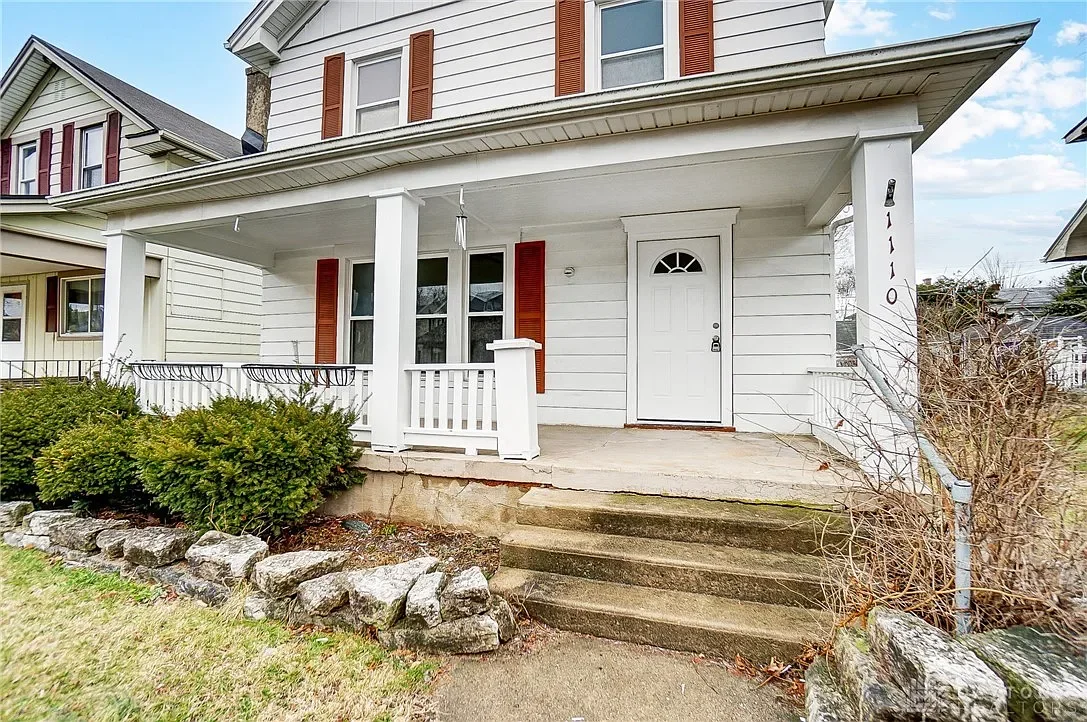
A Dayton home we bought from an owner working through a financial hardship, after renovation. See the full Dayton financial hardship project.
What the July 24 Deadline Actually Triggered
Ohio counties bill property taxes in arrears, in two halves. Montgomery County's second-half due date for 2025 taxes was extended to July 24, 2026. Missing it starts a sequence that is automatic — no one at the county has to decide to penalize you:
- A 10% penalty is applied to the second-half charge not paid in full by the due date.
- Interest is added August 1, 2026, and again on December 1, 2026, on the delinquent balance.
- Tax lien certificate eligibility — parcels with unpaid charges as of August 1 may be considered for a future certificate sale.
Notice what is not on that list: losing your home. August 1 is an eligibility date, not a foreclosure date. Nothing about your ownership changes on August 1.
The Montgomery County Delinquency Timeline
Here is how the sequence typically unfolds for an owner-occupied home that goes delinquent this summer:
| Stage | What Happens | Can You Still Fix It? |
|---|---|---|
| July 24, 2026 | Second-half due date passes; 10% penalty applied | Yes — pay in full or start a payment plan |
| August 1, 2026 | Interest added; parcel becomes eligible for certificate sale | Yes — a payment plan in good standing halts further penalty and interest |
| Autumn 2026 | Delinquency notices; the county publishes and markets eligible parcels | Yes — paying in full before the sale removes you from the list |
| Certificate sale date | Tax claim sold in bundles to investors under ORC § 5721.33 | Yes — pay in full by 4:00 p.m. on the sale date |
| Sale + 1 year | Certificate holder may begin foreclosure proceedings | Yes, but now you are dealing with a private investor, not the county |
The county has historically held its negotiated certificate sale in December. Dates move, so confirm the current year's schedule directly with the Treasurer's office rather than relying on last year's calendar.
What a Tax Lien Certificate Sale Actually Is
This is the piece almost everyone misunderstands, and the misunderstanding causes real harm — people panic, move out, or hand the house to the first person who knocks.
Under Ohio Revised Code § 5721.33, Montgomery County runs a negotiated tax certificate sale. Parcels are packaged into bundles and sold to institutional investors. What is sold is the tax claim — not your house. You keep title. You keep living there. Your mortgage, if you have one, is unaffected by the sale itself.
What changes is who you owe and what it costs:
- The certificate can carry interest of up to 18%.
- The purchaser is charged a $400 administrative fee, which ultimately attaches to the parcel.
- The certificate holder cannot start foreclosure for one year from the sale date.
That one-year window is real breathing room. It is also the most expensive breathing room available, because the balance compounds the entire time.
Tax Foreclosure vs. Mortgage Foreclosure
These are two different tracks, and Dayton homeowners regularly confuse them. A mortgage foreclosure is filed by your lender in the Court of Common Pleas when you fall behind on payments — we walk through that sequence in detail in our guide to the Ohio foreclosure timeline, and cover the ways to interrupt it in how to stop foreclosure in Dayton.
A tax foreclosure is initiated by the Treasurer (or later, by a certificate holder) over unpaid taxes, regardless of whether your mortgage is current. Treasurer's tax sales are held in person at 10:00 a.m. on the first Thursday of each month at the county administration building; mortgage and tax lien foreclosure sales run online on Friday mornings.
It is entirely possible to be perfectly current on your mortgage and still be in tax trouble. It is also common for both to slip at once — which is exactly the situation our foreclosure page and tax lien page were written for.
Your Options Right Now — In Order
1. Pay the balance in full
Obvious, and worth stating: paying in full at any point before the sale removes the parcel from the list. The penalty stands, but the compounding stops.
2. Set up a Treasurer's delinquency payment plan
This is the most underused option in Montgomery County. A delinquency payment plan is a contract between you and the Treasurer's office. A basic plan requires 20% down of the total owed — that total includes both the delinquency and the full year of current taxes — followed by monthly payments. Critically, while the plan is in good standing, further penalties and interest are not applied.
Call the Delinquency Department at (937) 225-4010, option 2. Call before a lien is sold, not after. Before the sale you are negotiating with a county office whose job includes keeping people in their homes. After the sale you are negotiating with an investor whose return depends on that 18%.
3. Check what you are entitled to
Ask the County Auditor whether you qualify for the Homestead Exemption (age, disability, and income conditions apply) or the Owner Occupancy Credit. Neither erases an existing delinquency, but both can lower the bill going forward — which matters if the underlying problem is that the payment is simply too big.
4. List the house and pay the taxes at closing
If you have equity and time, a traditional listing will usually net the most money. Dayton is not a slow market: Zillow's data put the average Dayton home value near $134,800 in mid-2026, up roughly 2.4% year over year, with homes averaging about 38 days on market in June 2026 — down from 42 days in May. Add the time to prepare, list, accept an offer, and let a buyer's lender close, and you should plan on a couple of months. We break the tradeoffs down honestly in our 2026 Dayton market guide and our cash offer vs. agent comparison.
5. Sell for cash and clear the lien at the table
If the house also needs work you cannot fund, or the timeline is too tight to list, a cash sale closes the gap. The delinquent taxes come out of the proceeds at closing and you keep the remainder. That is the entire mechanism — there is nothing exotic about it.
Can You Sell a House That Owes Back Taxes? Yes.
Unpaid property taxes are a lien against the parcel. Liens are paid at closing, in order, out of the sale proceeds. The title company requests a payoff figure from the Treasurer, the taxes are paid directly from the proceeds, and clear title transfers to the buyer. You do not have to pay the taxes first, and you do not have to bring money to the table as long as your equity covers what is owed.
The one scenario that requires more care is when the total of your mortgage, the delinquent taxes, and any other liens exceeds what the house is worth. That is a short sale conversation, and it is a real one — but it is far rarer in Dayton after several years of value growth than most owners assume.
Run Your Own Numbers Before You Decide
Before choosing anything above, get three figures on paper: what the county says you owe, what you owe on the mortgage, and a realistic sale value. Most people in this situation discover they have materially more equity than they feared — which turns a panic into a straightforward decision about timing.
If you decide to talk to us, our process page lays out the steps, and our FAQ page answers the questions we get most. We buy in any condition, we pay the closing costs, and we will tell you plainly when listing with an agent would serve you better than selling to us.